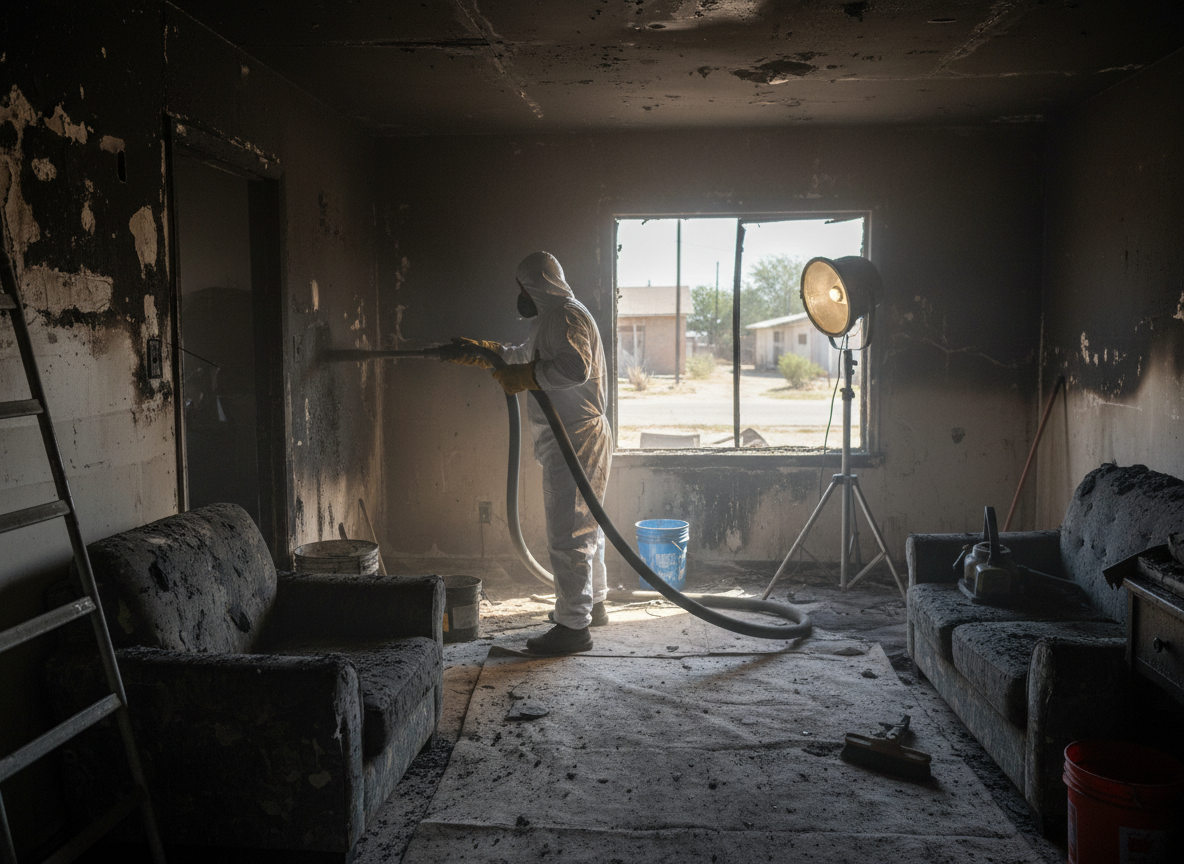
Laredo’s hot semi-arid climate with mild winters and hot summers allows smoke particles to travel farther and settle deeper into building materials than in more humid regions. Homes in Downtown and Del Mar often feature older plaster, wood framing, and stucco that absorb odors and residues quickly. When a fire occurs, technicians must test multiple layers because surface cleaning alone leaves hidden contamination that reactivates during the next humid spell or air-conditioning cycle. Webb County properties near San Agustin Plaza frequently require removal of affected insulation and HVAC components to prevent recirculation of soot throughout the structure.
In Hillside and Los Presidentes neighborhoods, many residences built on concrete slabs with tile floors trap smoke under cabinets and in wall cavities. The dry air typical of the region means residues dry fast and bond tightly, requiring specialized pH-neutral cleaners and air scrubbing equipment. Technicians also check for hidden water used during firefighting that can combine with smoke to create acidic compounds damaging to metal fixtures and wiring. Work in these areas often includes coordination with local permitting when structural elements are opened for cleaning.
Restoration crews serving Laredo and nearby Mission or McAllen routinely document pre-existing conditions such as prior water intrusion common after heavy rains. This prevents disputes over whether new discoloration stems from the recent smoke event. Odor removal in older adobe-influenced construction demands multiple treatments because the material continues to off-gas for weeks after visible soot is gone. Final clearance testing confirms that airborne particulates meet acceptable levels before occupants return.
Technician insight
In Laredo, the thing that catches most people out with Smoke Damage Restoration is how the dry semi-arid air lets soot bond into the stucco and tile floors typical of Hillside and Los Presidentes homes. Homeowners often think wiping visible surfaces is enough, but the next air-conditioner cycle pulls residues back out of the slab edges and wall cavities.
Smoke Residue in Del Mar Home After Kitchen Fire
A kitchen fire in a Del Mar residence sent smoke through the single-story HVAC system. Inspection revealed soot lodged under kitchen cabinets and inside return ducts. Crews contained the area, cleaned tile and plaster surfaces, treated the ductwork, and ran multiple odor neutralization cycles until testing cleared the home for re-entry.
How it works
- 1
Initial Assessment
Technicians inspect all affected rooms, test surfaces for pH levels, and document smoke migration paths through HVAC systems and wall cavities.
- 2
Containment and Ventilation
Negative air machines and plastic barriers isolate work zones while HEPA filtration removes airborne particles before deeper cleaning begins.
- 3
Residue Removal
Specialized cleaners matched to surface types remove soot from tile, stucco, plaster, and wood without causing additional damage or discoloration.
- 4
Odor Neutralization and Clearance
Thermal fogging and ozone treatments address embedded odors, followed by air quality testing to confirm the space meets restoration standards.
Pricing
Project pricing depends on square footage affected, number of rooms, and whether HVAC systems require cleaning or replacement.