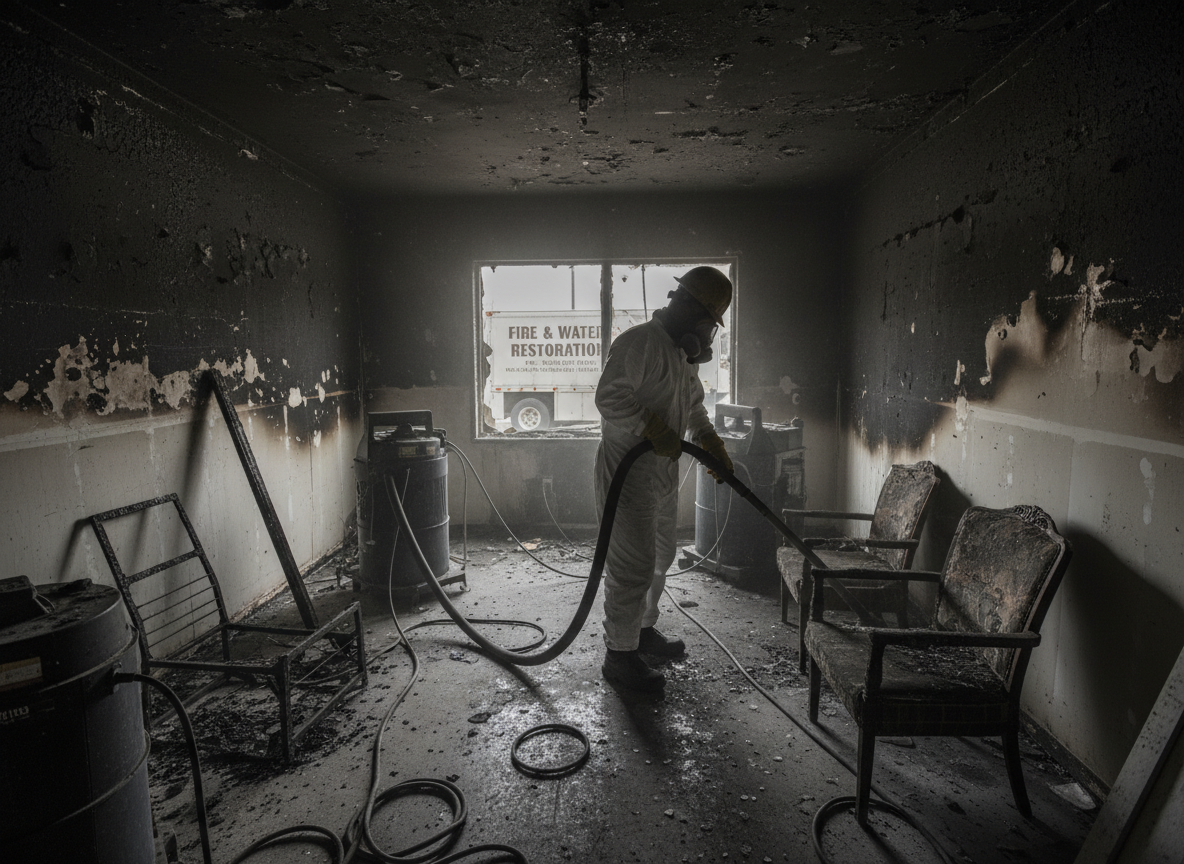
In Laredo’s hot semi-arid climate, smoke residue dries quickly into a fine, acidic powder that settles into the porous stucco and plaster walls common in older Downtown and Los Presidentes homes. Leaving it leads to corrosion on metal fixtures and HVAC coils within days. Crews use HEPA vacuums followed by alkaline cleaners matched to the residue type rather than generic degreasers that can etch surfaces.
Webb County properties near the Rio Grande often have elevated humidity pockets after a fire because evaporative coolers pull outside air. This combination keeps certain oily soot particles mobile long after the flames are out. Technicians seal off HVAC returns first, then run negative air machines to prevent cross-contamination into unaffected rooms such as those facing San Agustin Plaza.
Homes in Del Mar and Hillside frequently contain mixed construction from the 1960s onward, with both drywall and original wood lath. Soot travels differently along each substrate, requiring separate cleaning protocols. Skipping the wood-lath step leaves hidden residue that reactivates during the next summer heat wave and produces recurring odor complaints.
Technician insight
In Laredo, the thing that catches most people out with Fire Damage Clean Up is how the hot dry air turns soot into airborne dust that works its way behind baseboards and into the crawl spaces of 1970s brick homes in Del Mar. Homeowners often wipe visible surfaces and think the job is done, only to smell smoke again the first time the evaporative cooler kicks on.
Soot in Del Mar Attic
A kitchen fire in a Del Mar home sent smoke through the HVAC and into the attic. Inspection showed fine oily residue coating fiberglass insulation and roof decking. Technicians removed the contaminated insulation, cleaned the decking with alkaline solution, and treated the ductwork. The family returned without recurring odor even after summer temperatures returned.
How it works
- 1
Site Assessment
Inspect every room, attic and crawl space to map soot migration patterns created by Laredo’s typical wind directions.
- 2
Containment Setup
Install plastic barriers and negative air units to isolate affected zones from the rest of the structure.
- 3
Soot Removal
HEPA vacuum all surfaces, then apply pH-specific cleaners to walls, ceilings and contents.
- 4
Odor Neutralization
Fog with thermal or hydroxyl equipment and replace HVAC filters to eliminate embedded smoke smell.
Pricing
Cost depends on square footage affected, soot type and whether contents require separate handling; inspection provides a written scope before work begins.