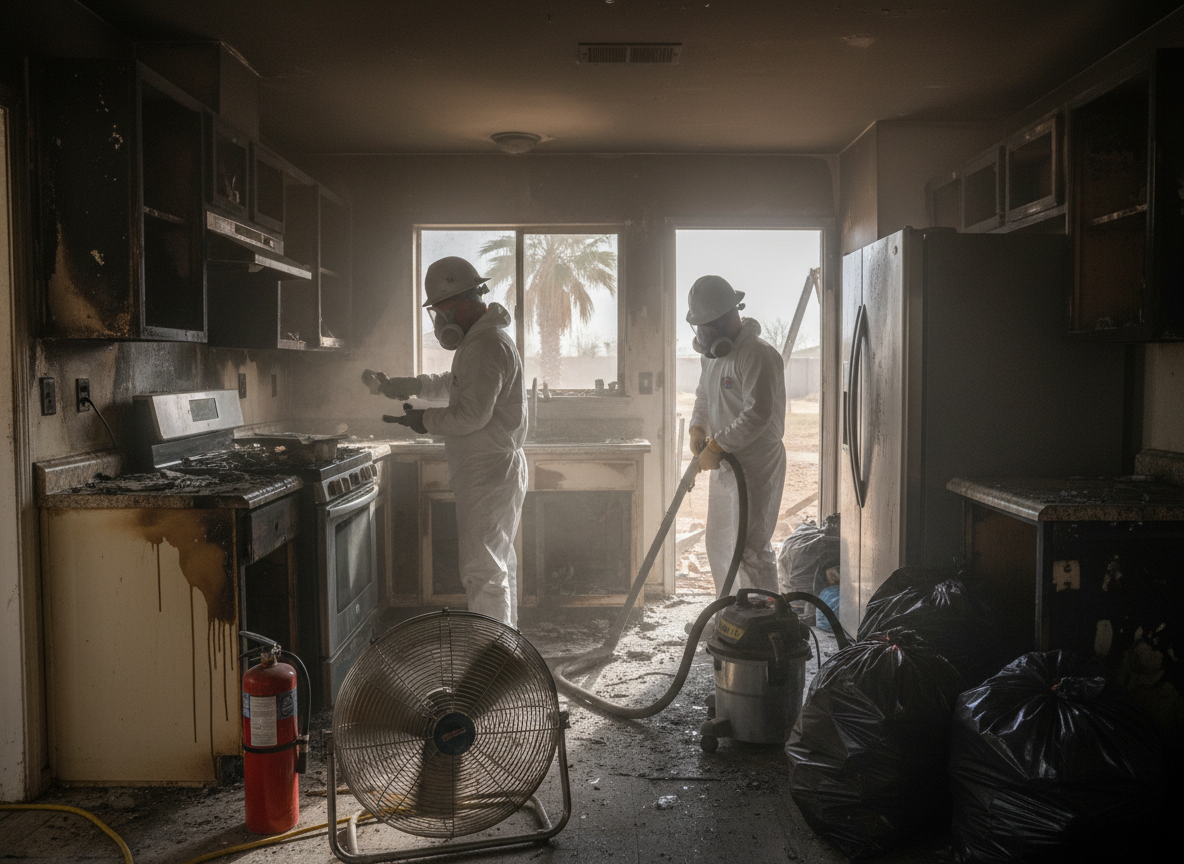
Kitchen fires in Laredo often start from unattended skillets or overheated grease on older ranges common in Del Mar and Hillside homes. Soot from these fires travels quickly through ductwork because the hot semi-arid air keeps particles airborne longer than in humid regions. Technicians must check behind cabinets and inside range hoods where residue hides, then use HEPA filtration to capture fine particles before they settle into carpet or drywall.
Older construction near San Agustin Plaza frequently includes plaster walls and limited attic access, so crews cut inspection openings only where needed and seal them afterward. Grease fires leave a sticky film that attracts more dust in the dry summers, requiring multiple passes with alkaline cleaners rather than standard degreasers. Electrical wiring in these homes can be brittle, so any charred outlets are isolated before power is restored.
After initial containment, air scrubbers run for several days to pull remaining smoke from wall cavities. Homeowners in Los Presidentes sometimes report odors returning weeks later when temperatures spike, because heat reactivates trapped residues. Final verification includes wiping every horizontal surface and checking HVAC filters that may have pulled soot from the kitchen into other rooms.
Seasonal Considerations
Laredo summers increase kitchen fire risk when residents run ovens and stovetops during peak heat. Mild winters reduce but do not eliminate calls, since holiday cooking still occurs. Crews schedule longer drying times in summer because low humidity speeds surface drying while trapping moisture deeper in insulation.
Technician insight
In Laredo the thing that catches most people out with Kitchen Fire Cleanup is how quickly grease smoke travels through the single-story stucco homes in Del Mar and Los Presidentes when windows stay closed during summer heat; the residue hides in the textured ceilings and comes back the first time the AC kicks on hard.
Grease Fire Spread in Hillside Kitchen
A skillet fire on a gas range sent heavy smoke into the living room of a 1970s home. Inspection showed soot inside the return ducts and behind the range hood. Crews removed affected drywall, cleaned all surfaces twice, and ran air scrubbers for seventy-two hours until readings cleared.
How it works
- 1
Secure and Assess
Technicians arrive within hours, shut off utilities if needed, and document the affected kitchen plus any smoke migration into adjacent rooms.
- 2
Contain and Remove Debris
Plastic barriers isolate the space, then charred cabinetry, drywall sections and grease-soaked materials are removed and disposed of following local Webb County guidelines.
- 3
Clean Surfaces and Air
Walls, ceilings and appliances receive repeated cleaning with appropriate agents, followed by air scrubbing to capture remaining particulates.
- 4
Odor Neutralization and Verification
Thermal fogging or ozone treatment addresses embedded smells, then independent testing confirms the space is clear before reconstruction begins.
Pricing
Upfront quotes follow on-site inspection because every kitchen fire spreads differently through Laredo housing stock.