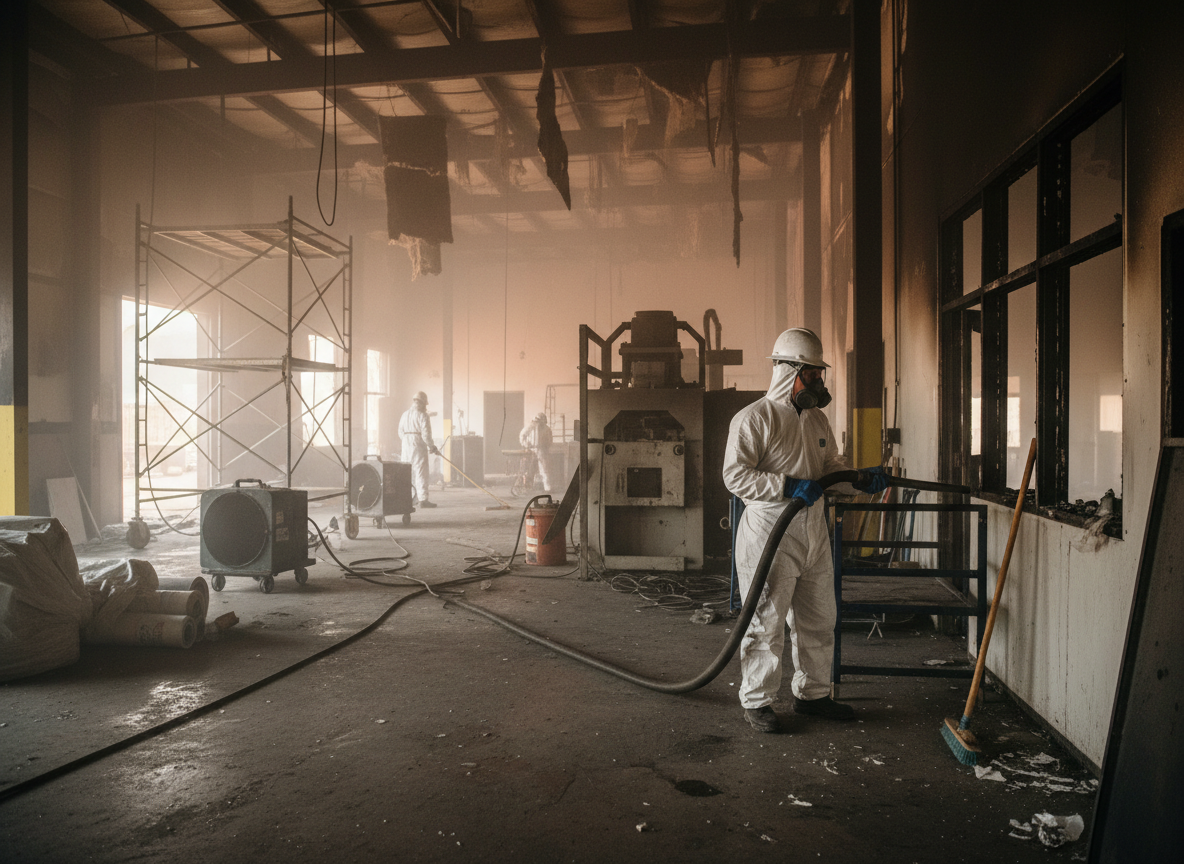
Commercial buildings in Laredo often feature older masonry construction in Downtown and around San Agustin Plaza that holds soot and smoke odor longer than newer structures. Hot semi-arid conditions with intense summer heat accelerate smoke residue bonding to HVAC systems and concrete floors, requiring specialized extraction before corrosion sets in. Webb County commercial jobs frequently involve mixed-use properties near the Republic of the Rio Grande Museum where fire travels through shared walls and attics, demanding coordinated containment to protect adjacent businesses.
Restoration crews must account for Laredo’s mild winters that still bring occasional cold fronts capable of condensing moisture inside wall cavities after suppression, leading to hidden mold growth weeks later. In Hillside and Los Presidentes commercial strips, terrain slopes can direct water runoff from fire hoses into lower levels, complicating drying and requiring targeted dehumidification. McAllen and Mission operators who commute to Laredo properties sometimes underestimate how regional dust mixes with combustion byproducts, creating abrasive residues that damage sensitive equipment if not removed with HEPA filtration.
Code compliance in Webb County means coordinating with local inspectors on electrical re-energization and occupancy loads after any structural compromise. Owner-operated teams familiar with these patterns prioritize source removal over masking agents, especially in retail spaces where lingering odors affect foot traffic for months. Upfront walkthroughs at the 7917 McPherson Rd location allow crews to stage equipment for rapid deployment when fires strike near Laredo Center for the Arts or busy corridors.
Seasonal patterns matter because summer heat increases the speed of secondary damage from acidic smoke on metal fixtures common in older commercial stock. Proper documentation of pre-existing conditions in Del Mar warehouses prevents disputes during insurance reviews, and crews document every step to support claims without delay.
Technician insight
In Laredo, the thing that catches most people out with Commercial Fire Restoration is how quickly our hot semi-arid summers bake acidic soot into the older brick and concrete found around Downtown and San Agustin Plaza. Homeowners and managers often skip thorough HVAC cleaning, then wonder why odors return the first time the system kicks on during a summer heat wave.
Del Mar Office Complex Smoke Event
A kitchen fire in a Del Mar strip-center restaurant sent heavy smoke through shared ductwork into adjacent professional offices. Crews found residue throughout the second-floor HVAC and inside exterior masonry walls. They performed source removal, negative-air drying, and odor treatment, allowing tenants to reopen within ten days without recurring smells.
How it works
- 1
Initial Assessment
Technicians arrive within hours, document the commercial space, and identify structural, electrical, and HVAC impacts specific to Laredo building types.
- 2
Safety and Containment
Secure the site, set up negative air pressure, and protect neighboring units in shared Downtown or Hillside buildings.
- 3
Soot and Residue Removal
Use HEPA equipment and pH-neutral cleaners to extract smoke from masonry, flooring, and ventilation systems before heat bonds residues permanently.
- 4
Drying and Odor Neutralization
Deploy commercial dehumidifiers and air scrubbers, addressing moisture from suppression water that can linger in arid climate wall cavities.
- 5
Rebuild and Verification
Coordinate repairs, final cleaning, and inspection sign-off to return the property to code-compliant operation.
Pricing
Upfront quotes after on-site inspection; costs vary by square footage, smoke penetration depth, and HVAC complexity.