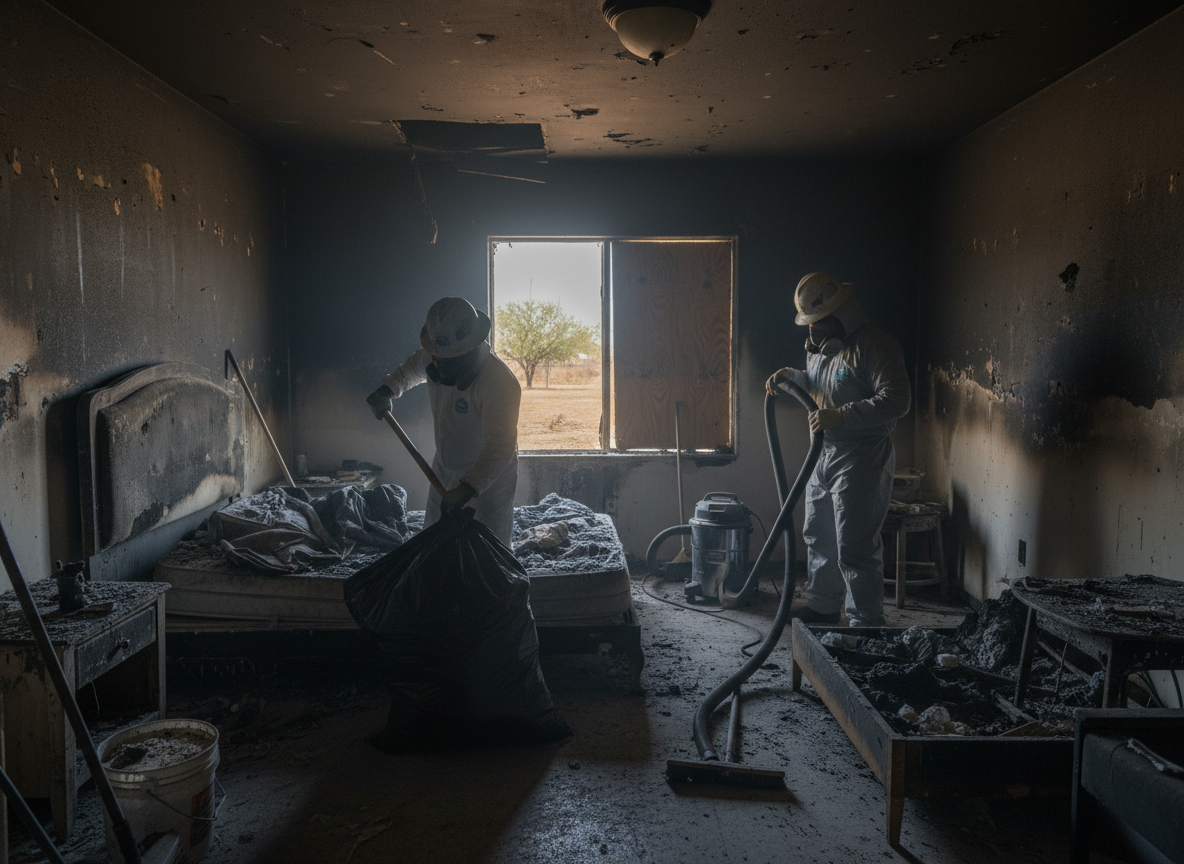
Laredo’s hot semi-arid climate drives rapid soot settling in bedrooms after a fire. Fine ash particles from burning synthetics and wood penetrate carpet padding, mattress seams and the textured drywall common in 1970s-1990s homes throughout Del Mar and Hillside. Once winter temperatures drop, closed windows and running furnaces pull those particles deeper into HVAC returns, turning a contained bedroom incident into whole-house contamination if the return is not isolated immediately.
Older housing stock near San Agustin Plaza and Downtown often features single-pane windows and minimal insulation. Heat from the fire expands and contracts these frames, creating micro-cracks that allow smoke odor to linger in wall cavities. Restoration crews must remove baseboards and drill inspection ports rather than rely on surface cleaning alone, then seal cavities with appropriate primers before reinstalling trim to prevent odor re-release during the next hot summer.
Webb County properties near the Rio Grande experience higher humidity spikes during rare rain events. This moisture combines with alkaline soot to etch finishes on wood furniture and laminate flooring inside bedrooms. Crews test pH levels on every affected surface before applying neutralizers; skipping this step leaves a white film that reappears after the next humidity rise and forces repeat visits.
Mission and McAllen homeowners who commute to Laredo sometimes request the same crew for cross-border jobs, but local codes require separate containment protocols because Webb County fire departments use different ventilation standards than Hidalgo County crews. Matching the correct negative-air machine size to the bedroom volume avoids pulling soot past the doorway and into hallways.
Technician insight
In Laredo, the thing that catches most people out with Bedroom Fire Damage Cleanup is how the hot semi-arid winds push fine soot through single-pane windows and into wall cavities of older Downtown and Del Mar homes. Homeowners often start cleaning too soon and spread alkaline residue onto carpet padding that then hardens when the next humidity spike hits from the Rio Grande.
Hillside Bedroom After Kitchen Fire
Smoke traveled from a kitchen stove fire into a Hillside bedroom through the shared HVAC return. We found soot embedded in the carpet pad and inside the window frames. After isolating the room, removing affected padding, and neutralizing the drywall, the bedroom passed air testing and the family moved back in without odor return during the following hot spell.
How it works
- 1
Initial Assessment
Technician inspects the bedroom for soot depth, structural char, and HVAC pathways while documenting all affected materials.
- 2
Containment Setup
Plastic barriers and negative-air machines isolate the bedroom from the rest of the Laredo home to prevent cross-contamination.
- 3
Soot and Debris Removal
HEPA vacuuming, chemical sponges and pH-neutral cleaners lift residue from drywall, carpet and furnishings without spreading particles.
- 4
Odor Neutralization and Sealing
Thermal fogging or hydroxyl treatment followed by sealing of porous surfaces stops smoke odor from returning during Laredo’s temperature swings.
- 5
Final Clearance
Air quality testing and visual inspection confirm the bedroom meets pre-loss conditions before contents are returned.
Pricing
Scope and materials determine final cost; we provide upfront written quotes after inspection.